Ubuntu is a communal ethic rooted in small, cohesive societies, prioritizing belonging, mutual care, and harmony over individual autonomy. It was never designed as a political system at national scale, nor as a framework for individual rights, dissent, or limits on centralized power. In this essay In this essay, I will show that Ubuntu survives only inside freedom, and that when imposed beyond its natural limits, it becomes indistinguishable from collectivist control.

Blog
❦The Blind Spot in the Public School Debate
Many parents assume the education system reflects the basic civic values they themselves hold: fairness, responsibility, freedom of thought, and opportunity. That assumption is understandable—and increasingly risky. What many children encounter in schools today is not partisan politics, but a deeper shift in how rights, power, and responsibility are framed. Ideas once taken for granted—such as property, voluntary exchange, and limits on authority—are quietly reinterpreted, often without parents ever being told explicitly. This isn’t about turning children into members of one political party or another. It’s about whether parents are aware of the moral and civic framework their children are inheriting by default. When institutions teach values by omission rather than debate, consent is replaced by assumption—and most families never realize a choice was made for them.
❧ Self-Ownership Is the First Law
Even a slave possesses inalienable rights, because no man can lawfully be owned by another. Self-ownership precedes government, law, and consent; it is a fact of human existence, not a political concession. Slavery does not erase rights—it violates them. A man in chains is not rightless; he is wronged.
When Saying the Wrong Thing Costs More Than Breaking the Law
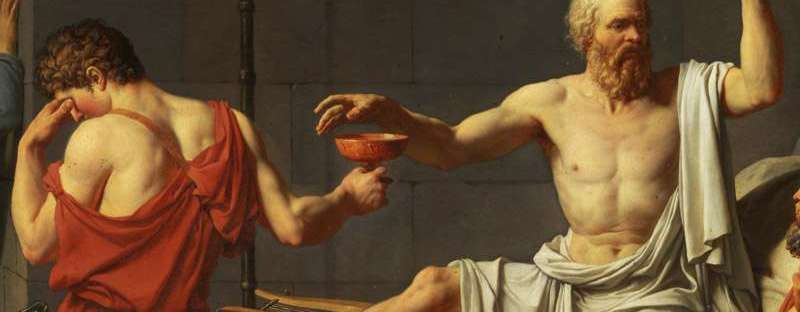
History is clear: when speech becomes more dangerous than crime, law has already lost its authority. From ancient Athens to enduring works of literature, civilizations reveal their decay not by what they tolerate—but by what they silence.
Capitalism Is the Free Market: (explained with cookies)
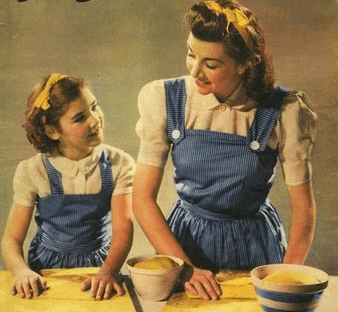
Most people misunderstand capitalism because they’ve never learned what it actually is. At its core, it’s just people choosing—like kids trading cookies by choice, not by force.
Women and the Art of Deception
Female deception is evolutionary. Feminine virtue is cultivated. Civilization depends on which one women choose.
The Free Market of Trust
Trust is not owed to public figures; it is exchanged. The greater a person’s influence over the minds, money, and lives of others, the greater their obligation to withstand scrutiny. Transparency is not a punishment—it is the price of influence in a free society.
❧ Come Home, America
What passes for conservatism today is increasingly unrecognizable. Empire is being sold as strength. Endless intervention is being dressed up as “America First.” And anyone who objects is dismissed as weak, liberal, or naïve. Tom Woods is right to sound the alarm. True conservatism was never about ruling the world. It was about limits—moral, constitutional, and human. The Founders warned explicitly against foreign entanglements not because they were indifferent to evil, but because they understood something we have forgotten: a nation that tries to manage the world will inevitably lose the ability to govern itself. Empire does not make a people great. It makes them distracted, indebted, and morally hollow. It drains families at home and shatters families abroad, all while calling the sacrifice “patriotism.” America was not founded to be feared. It was founded to be free.
❧Ways to Teach Economics to Your Children
Economics is not first learned in classrooms, markets, or ballot boxes. It is learned in the home. Long before children encounter taxes, debt, or inflation, they are already forming beliefs about money, work, fairness, and responsibility. If parents do not teach these truths deliberately, the State and the screen will fill the vacuum — and they will not teach freedom. Children must learn early the difference between voluntary help and forced redistribution, between charity and control, between earning and entitlement. These lessons do not require jargon or ideology. They require only simple questions, lived examples, and the courage to tell the truth plainly. A child who understands choice, consequence, and scarcity does not grow into a cruel adult. They grow into a competent one. And competence, not sentiment, is the foundation of a free society.
Parents: You Can’t Give What You Don’t Have
Children are often shaped less by harm than by absence; the absence of moral authority and virtue in the adults who raise them. Where prudence, temperance, fortitude, and justice are weak, children inherit disorder by proximity. Take the virtue test and see where you need to grow.