How schools shape what our children believe without calling it politics, and why it’s not a partisan issue
“Of all tyrannies, that of the sincerely convinced idealist is the worst.”—C. S. Lewis
Much of the current debate about education is misframed from the start. Many Republicans fear their children will be indoctrinated into becoming Democrats, which is why so many have chosen homeschooling, Catholic schools, or private education. Their response is simple: remove their children from institutions they no longer trust.
Democrats, on the other hand, tend to place deep trust in public schools and government institutions. They are not communists, as they have no desire or thought to abolish private property, so they logically (although perhaps naively) dismiss the claim that public education is openly trying to “turn kids into communists” as a right-wing conspiracy theory. Because they understand their own values as moderate, liberal, and democratic, they assume the institutions they support reflect those same values.
This is where the blind spot lies. For both sides, because neither actually understands what radical revolutionary communism is.
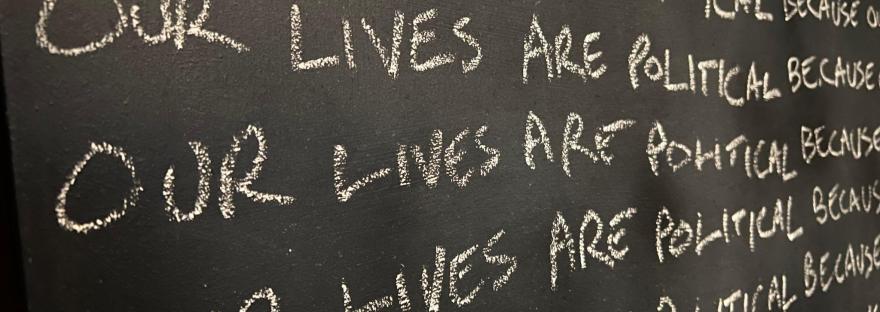
What is being taught in many schools is not partisan loyalty to the Democratic Party. It is something more abstract, but mush more consequential and dangerous. Students are increasingly introduced to moral frameworks that reject natural rights such as property and voluntary exchange, while redefining “rights” as entitlements to goods and services that must be provided and enforced by the state; such as, healthcare, education, food and housing. Power is framed as a moral necessity, dependency as justice, and dissent as harm and even a callous disregard for the dignity of the human person.
This ideology does not announce itself as “communism,” which is why many parents never see it coming. It is taught in the language of care, equity, and progress, even as it quietly abandons the foundations of liberal democracy itself. The result is that children absorb ideas their parents never consciously endorsed; ideas many Democrats themselves would reject if stated plainly.
Ironically, the parents most confident in public institutions are often the least aware of how far those institutions have drifted from the values they believe they are defending. This is not a left-versus-right problem. It is what happens when institutional trust outpaces civic understanding.
“Education is simply the soul of a society as it passes from one generation to another.” — Chesterton
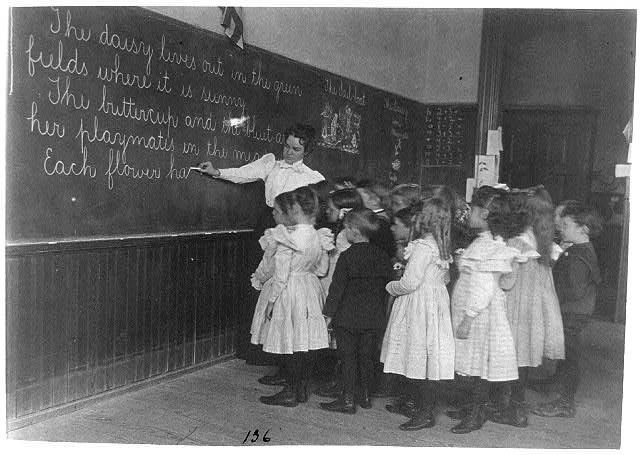
Radical movements do not always spread overtly or aggressively, through persuasion. They spread through long-game planning and inheritance, when institutions teach children a moral framework their parents never consented to. Radical revolutionaries now occupy key positions in schools and cultural institutions, and they do not need your knowledge, votes or your parental consent; only your inattention and trust.
It is vital to understand that institutional power is upstream from culture and politics. Control the institutions, and the rest follows. By that measure, they are winning, and most people remain entirely unaware; believing the problem is a “Democrat” or “Republican” one.
That should concern everyone.
Grace Armstrong
“The real power in any system is whoever controls the education of the young.”—George Orwell

 thehearthofvirtue.com