Civilizations rarely announce their decline. They reveal it quietly; by what they punish.
Civilizations rarely announce their decline. They reveal it slowly; by what they punish.
There comes a moment in every decaying order when speech becomes more dangerous than crime. Not violence. Not theft. Not corruption. But words, questions, refusals, memory. At that point, law is no longer the highest authority. Narrative is.
This is not new.
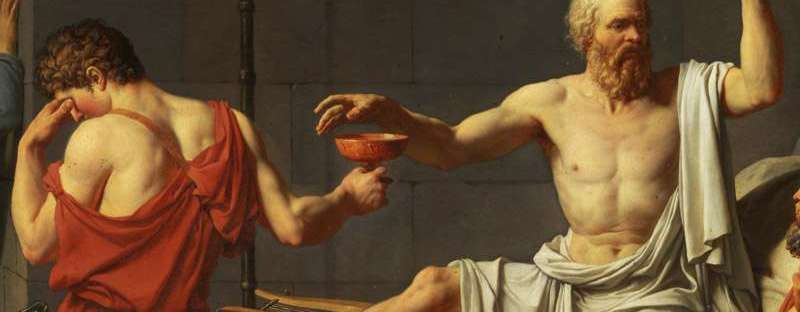
In ancient Athens, Socrates was executed not for harming anyone, but for speaking in a way that unsettled the powerful. His questions embarrassed men who governed by status and consensus rather than truth.. The city could tolerate corruption, vanity, and cowardice. It could not tolerate a man who asked others to think out loud. Speech exposed what law politely ignored.
When saying the wrong thing cost more than breaking the law.
The pattern repeats in scripture. The prophets were not persecuted for crimes, but for words. Kings who permitted exploitation, idolatry, and injustice drew the line at public truth-telling. To name wrongdoing was to threaten authority itself. Silence was loyalty; speech was treason. This is why prophets, and Christ himself, were imprisoned, exiled, and murdered—not because they break laws, but because they dissolve lies.
When saying the wrong thing cost more than breaking the law.
Under the Roman Empire, early Christians were not punished for immoral behavior. They were punished for refusing to say a sentence. “Caesar is Lord.” A verbal confession mattered more than conduct. One could live quietly, pay taxes, obey laws; and still die for a refusal of compelled speech from the rulers. Power did not require an actual crime as pretext for law enforcement to act. It required submission of the tongue.
When saying the wrong thing cost more than breaking the law.
Literature preserves the warning when history grows forgetful. In The Crucible, guilt is irrelevant. What matters is confession. Saying the right words ensures survival; saying the true words invites death. Silence itself becomes suspicious. Speech is no longer a means of communication—it is a loyalty test.
When saying the wrong thing cost more than breaking the law.
In 1984, the gravest offense is not violence but thoughtcrime. The regime does not fear rebellion nearly as much as independent perception. A society that punishes speech more harshly than brutality has already conceded that truth is its greatest enemy.
When saying the wrong thing cost more than breaking the law.
This is the unmistakable sign of moral inversion: when actions may be forgiven, excused, or ignored completely; but words may not.
At this stage, law no longer functions to restrain wrongdoing. It functions to enforce agreement. Speech is policed because speech is where conscience lives. And conscience, once awakened, cannot be easily controlled.
A civilization that fears words has already itself. It no longer believes its principles can withstand scrutiny. So it substitutes punishment for persuasion, silence for debate, and fear for virtue and truth telling.
History is clear on this point:
When saying the wrong thing costs more than breaking the law, the law has already lost its soul.
And when that happens, virtue becomes a private and dangerous act of courage.

 thehearthofvirtue.com