How households form free people, not dependents
“Give me four years to teach the children and the seed I have sown will never be uprooted.” — Vladimir Lenin
There is no such thing as an economically neutral childhood.
If parents do not teach their children how money works, someone else will — and that someone will not teach freedom. They will teach entitlement, resentment, and obedience wrapped in moral language. Tyranny never arrives announcing itself as tyranny. It arrives disguised as compassion, fairness, and safety, and it relies almost entirely on economic ignorance to survive.
Economics, at its root, is not about spreadsheets or markets. It is about choice, consequence, scarcity, responsibility, and reality. Which means economics is first learned — or not learned — in the home.
Below are simple, concrete ways to teach your children the economic truths that free people must understand.
❧ 1. Teach That Money Is Earned, Not Given
Money is not a birthright. It is the result of value created for others.
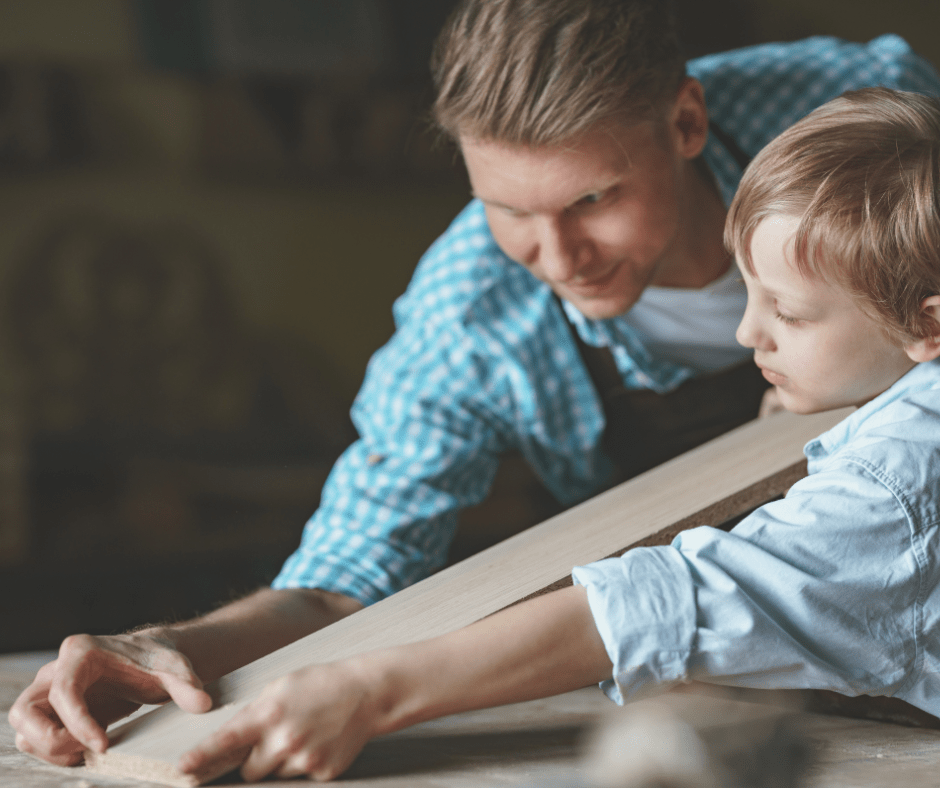
Children should be paid for real contribution, not for merely existing. An allowance detached from effort trains expectation without responsibility. It teaches a child to consume before they understand production. And it teaches them entitlement.
Let children experience the dignity of work early:
- Chores tied to contribution, not entitlement
- Payment tied to effort and reliability
- Clear explanation: people pay because something was useful to them
When money is given without effort, entitlement replaces gratitude.

❧ 2. Teach Scarcity — Calmly and Without Guilt
“The first lesson of economics is scarcity: there is never enough of anything to satisfy all those who want it. The first lesson of politics is to disregard the first lesson of economics.” —Thomas Sowell
Scarcity is not oppression. It is reality.
Give children a fixed amount of money and allow them to choose how to spend it. When it is gone, it is gone. Do not rescue them from bad choices. Regret is a better teacher than lectures, and far kinder than future debt.
Say it plainly:
- Choosing one thing means giving up another
- Resources are finite
- Limits are not cruelty
A child who never learns limits becomes an adult who demands control.
❧ 3. Teach Saving Before Spending
Saving is simply respect for the future.
Physically divide money into save, spend, give. Let children watch savings grow over time. Tie saving to real goals, not abstractions. Show them that patience compounds — not just financially, but morally.
This trains:
- Delayed gratification
- Long-term thinking
- Self-command
Debt begins where patience ends.
“The art of economics consists in looking not merely at the immediate but at the longer effects of any act or policy; it consists in tracing the consequences of that policy not merely for one group but for all groups.” – Henry Hazlitt

❧ 4. Teach Charity as Voluntary — or Not at All
Charity is love freely given, not resources seized.
Never force a child to give in the name of “fairness.” Forced generosity is not virtue; it is moral theater. Let children choose when and how to give. Praise generosity only when it costs them something.
Explain clearly:
- Charity without choice is not charity
- Love requires consent
- Virtue cannot be coerced
Confiscation and coercion are not compassion, no matter how tender and sentimental the language.
❧ 5. Teach That Prices Tell the Truth
Prices are information, not insults.
At the store, compare brands. Ask questions:
- Why does this cost more?
- What went into making it?
- How far did it travel?
- What happens if many people want it?
Children quickly grasp that prices reflect labor, scarcity, quality, and demand — unless adults teach them to resent prices instead of understand them.
Prices speak reality to those willing to listen.

❧ 6. Teach That All Honest Work Is Dignified
Contempt for work is a luxury belief.
Never demean trades, service work, or manual labor. Explain specialization: society functions because people do different things well. Let children see adults work, fail, adjust, and improve.
Say it plainly:
- No one owes you a living
- Independence is built, not granted
- Work is not a punishment
A society that despises work soon despises workers.
❧ 7. Teach Debt as a Chain, Not a Tool
Debt is future labor promised away.
Explain debt in time, not money.
“This costs six Saturdays of work.”
“This takes one year of your life to repay.”
Do not normalize borrowing for consumption. Model restraint visibly. Children learn more from what parents refuse than from what they explain.
Debt does not disappear; it waits.
❧ 8. Teach That the State Is Not a Parent
The family is the first economy.
Children must understand the difference between voluntary help and government force. Use simple, thought inspiring questions like:
- If you take someone’s money without asking, what is that called?
- Can giving to others be good if someone forces you to give?
- If someone took your allowance against your wished “for fairness” would that be good?
- Who should decide where a person’s money is given? The giver or someone else?
- Is help still kindness if refusal to help is punished?
- Can generosity exist without choice?
- Is taking from one person to help another the same as helping them yourself?
No hysteria. No slogans. Just calm reality.
A child who confuses government with family will grow into a subject, not a citizen.

For the Household: A Printable Checklist for Teaching Economics at Home
Principles matter only insofar as they are lived. To help translate these ideas into daily habit, I’ve created a printable parent checklist designed for reflection, not comparison. Use it as a steady reference point as you form your household — not all at once, but faithfully. You can find it here.
❧ Closing Reflection
Children raised with economic clarity do not grow into cruel and selfish adults, as the socialists warn. They grow into competent ones who understand limits, trade-offs, responsibility, and consequence. Tyranny feeds on confusion, ignorance and false compassion; freedom requires clarity and courage.
If we want a free society, we must raise children who understand how the world actually works — not how tyrants wish it worked. And that work does not begin in classrooms, legislatures, or ballot boxes.
It begins at the kitchen table.


 thehearthofvirtue.com