Why Parental Virtue Comes First (Questionnaire Included)
“Children have not the instincts of self-command.”
— Jane Austen
❦
There is no shortage of parenting advice. There is, however, a profound shortage of morally formed adults.
Modern parenting culture is saturated with techniques: scripts, schedules, acronyms, therapeutic language, and endless expert opinions. What it carefully avoids is the only question that actually determines outcomes:
What kind of person is doing the raising?
Children are not shaped primarily by strategies. They are shaped by presence. By tone. By restraint. By authority that is calm, ordered, and consistent. When parents lack virtue, no method can compensate for it. When parents possess virtue, far fewer methods are required.

Virtues Reflected: Temperance, Authority, Ordered Love: This portrait offers a vision of motherhood that is both tender and governed. The affection between mother and child is unmistakable, yet it is not indulgent or disorderly. Vigée Le Brun presents herself as composed, self-possessed, and fully present; a woman who has mastered herself and therefore offers her child security rather than emotional dependence.
❦
Character Is Caught Before It Is Taught
A child does not need to experience overt abuse to be harmed.
He needs only to be raised in a moral void.
When parents lack:
- Temperance, children learn that appetite rules.
- Fortitude, children learn avoidance.
- Prudence, children learn impulse.
- Justice, children learn entitlement.
This is not cruelty or judgment; it is simple causality; virtue does not teach itself.
A household without virtue is not neutral. Where virtue is absent, vice does not politely stay away. It fills the vacuum slowly and quietly, and then completely.
❦
Why Self-Examination Must Come First
Parents often ask, “What should I do about my child?”
The more honest question is, “What must I correct in myself?”
A parent who cannot govern their own reactions cannot teach self-control.
A parent who avoids discomfort or boredom cannot form resilience.
A parent who confuses love with indulgence cannot raise a strong child.
Children do not need perfect parents.
They need morally awake ones.
This is why parental self-examination is not optional. It is the foundation.
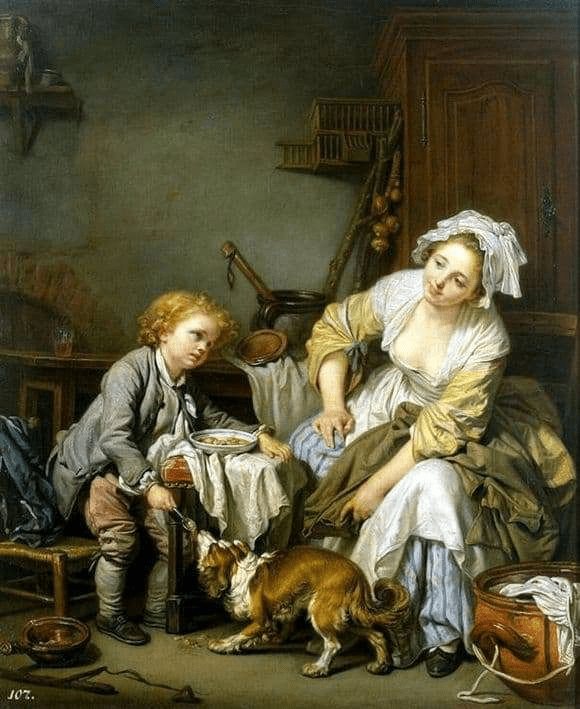
Virtue Reflected: Fortitude & Daily Duty
Chardin’s genius lies in dignity without drama. This is virtue lived in repetition: work done, burdens carried, responsibilities met. Children raised amid such steadiness learn endurance naturally. Fortitude is not taught by speeches; it is absorbed through uncomplaining example.
❦
A Brief Parental Virtue Check
Answer honestly. No one else will see your answers — but your children already live with the results.
Prudence: Clear Judgment
- Do I pause before reacting, or do I respond emotionally?
- Can I explain why rules exist?
- Do I consider long-term character, or only short-term peace?
Where prudence is weak, chaos feels urgent.
Temperance : Self-Command
- Do I regulate my own screen use, speech, food, and spending?
- Do I model restraint, or excuse excess?
- Can I remain measured when tired or irritated?
If you excuse excess in yourself, your child learns excess as normal.
Fortitude : Strength to Endure
- Do I follow through on consequences?
- Do I avoid conflict to keep the peace?
- Can I endure resistance without surrender?
If you cave easily, you are training weakness.
Justice: Right Order
- Do I hold my child accountable?
- Do I require apology and restitution?
- Do rules actually mean something in my home?
When justice is absent, entitlement grows.
Humility: Teachability
- Can I admit when I am wrong?
- Do I accept correction?
- Do I assume my instincts are always right?
Pride halts growth. Always.
Authority: Moral Leadership
- Do I see myself as the moral authority in my home?
- Do I expect respect or negotiate endlessly?
- Does “no” mean no?
Where authority is weak, disorder rushes in.
❦
What Your Results Actually Mean
If this assessment exposed weaknesses, that is not a condemnation.
It is an invitation: It is never too late to raise yourself!
Virtue is not a personality trait.
It is a habit, and habits can be built.
Your child does not need you to be flawless.
They need you to be serious.
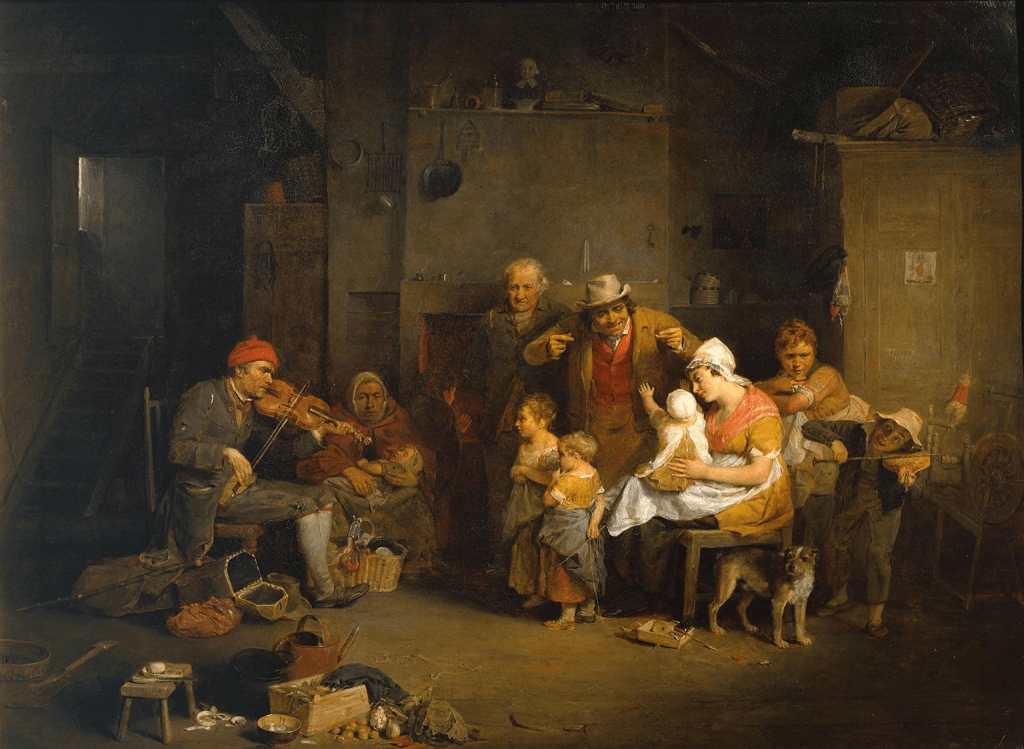
Virtues Reflected: Social Order, Reverence, Moral Formation within Community
Though livelier in tone, Wilkie again presents a household governed by structure rather than chaos. Children observe adults, elders are respected, and each person occupies a recognizable place. Joy exists here, but it is contained within order. This is not permissiveness; it is communal harmony born of shared moral expectations.
❦
The Graceful Authority of a Formed Parent
When a parent governs themselves:
- Discipline becomes calm rather than reactive.
- Love becomes stable rather than sentimental.
- Authority becomes reassuring rather than oppressive.
A virtuous parent does not need to yell, bargain, or therapize misbehavior.
Their presence carries weight because it is ordered.
This is what children trust.
❦
Final Thought
“There is no charm equal to tenderness of heart.”
— Jane Austen
You cannot outsource moral formation; you cannot skip it; and you cannot give what you do not have. The child is not the project. The parent is!

 thehearthofvirtue.com